If you walk your dog around Crawford Park on a weekday evening, you already know the loop. You park near the mansion, follow the perimeter path past the sunken garden, let the dog work the treeline, and circle back to the car by the ballfields. It's the walking path along the perimeter of the park which is very popular among dog walkers and joggers alike, and most people who live within a mile of it have worn a version of that same groove into the grass.
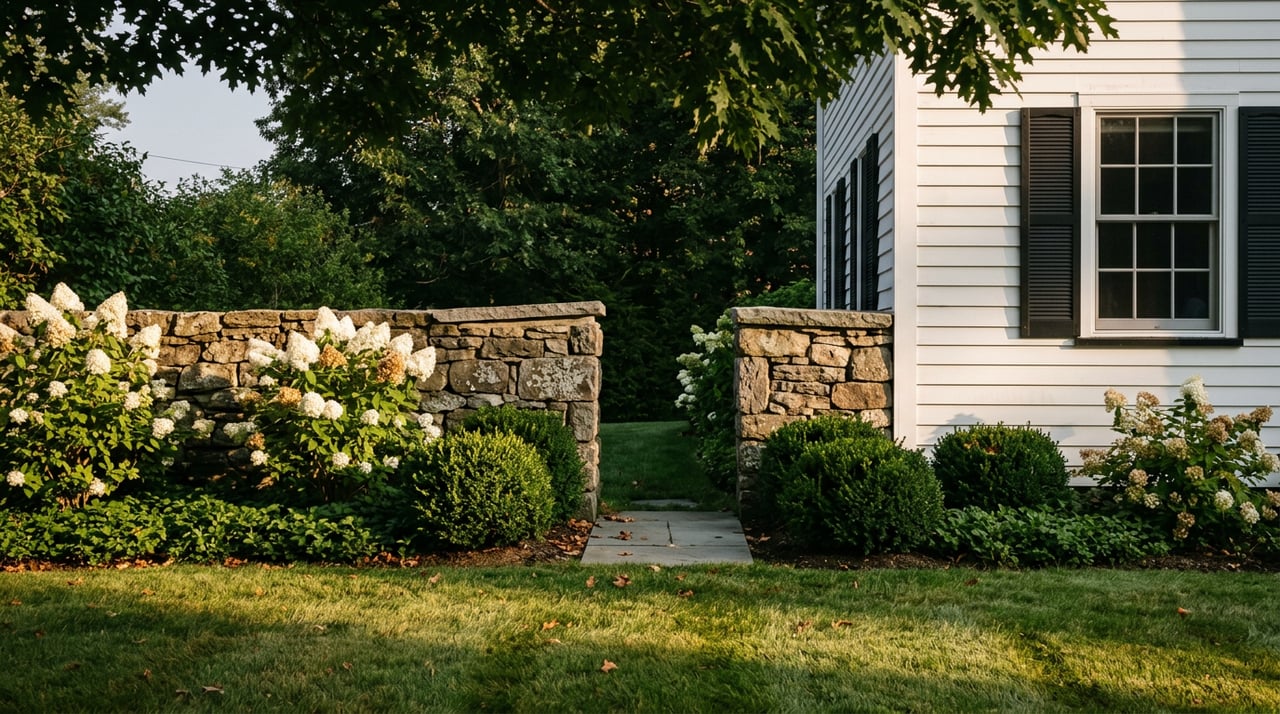
What almost nobody does is keep walking past the back of the lawn, toward the low stone wall at the far edge of the property. Step through the gap in that wall and you're standing in a second park. It has its own walking path, its own basketball court, and a trellis positioned to look straight out toward Long Island Sound. It is called Rye Hills Park, and it sits close enough to Crawford Park that you could throw a tennis ball between them, yet it operates as a completely separate piece of village infrastructure that Crawford Park's own signage does nothing to advertise.
Two Parks, One Wall, Different Owners
Here's the mechanism that explains the gap in most residents' mental map. Crawford Park, the 36-acre preserve with the early 20th-century mansion and sunken garden, is owned by the Town of Rye. Village of Rye Brook residents use it constantly, for soccer, tee-ball, and softball, but the property belongs to a different municipal government than the one that manages most of Rye Brook's other parks. Rye Hills Park, immediately behind it, belongs to the Village of Rye Brook itself.
Two municipalities, one shared property line, and a stone wall between them is a fairly mundane fact of local governance. But it has a real effect on what residents actually know about the space around them. The Town's Crawford Park page has no reason to mention a Village-owned park on the other side of its own wall, and the Village's own materials describe Rye Hills as sitting "behind the wall at Crawford Park," which only makes sense if you already know there's a wall to look for. Nobody is hiding the park. It's just administratively invisible from the one entry point everybody already uses.
What's Actually Back There
Rye Hills Park is a passive park, which in municipal language means there's no scheduled programming and no ballfields competing for your attention. According to the Village of Rye Brook's own listing, it's tucked off Park Ridge Court inside the Hidden Fall development, and its official directions are as unglamorous as it gets: from North Ridge Street, turn into the Crawford Park driveway, park near the mansion, and walk through the wall.
Once you're through, the amenities are modest and deliberately quiet:
- A walking path that loops through mature trees
- A basketball court
- A pair of game tables
- A circle ring built for storytelling or small group gatherings
- A trellis angled to frame a view toward Long Island Sound
None of it is flashy. That's the point. Crawford Park does the heavy lifting for anyone who wants a bigger lawn, a playground, or a picnic pavilion. Rye Hills exists for the version of a walk where you're not sharing the path with a soccer practice or a birthday party.
The two parks share a property line and a stone wall, but they're run by different governments, which is the entire reason one of them stays quiet.
There's a practical wrinkle worth knowing if you ever want the space to yourself for something bigger than a walk. The Village rents out two-hour blocks of Rye Hills Park, and the rate rose to $150 as of June 1, so a small gathering under the trellis is genuinely bookable, not just theoretical.
Building a Weekly Rotation
Once you know Rye Hills exists, the rest of the village's park system starts to look less like a single loop and more like a set of options depending on what kind of walk you're actually in the mood for. Here's how the pieces fit together, by park and by ownership.
| Park | Ownership | What's There |
|---|---|---|
| Crawford Park | Town of Rye, used by the village | 36-acre preserve, early 20th-century mansion, sunken garden, playground, picnic pavilion, perimeter walking path |
| Rye Hills Park | Village of Rye Brook | Walking path, basketball court, game tables, storytelling circle ring, trellis facing Long Island Sound |
| Harkness Park | Village of Rye Brook | Four tennis courts, home to Blind Brook Tennis, located next to Blind Brook High School |
| King Street Athletic Fields | Village of Rye Brook (830 King Street) | Turf soccer and softball fields, walking path, concession stand |
| Pine Ridge Park | Village of Rye Brook | Two Little League fields, four tennis courts, basketball courts, playground |
| Garibaldi Park | Village of Rye Brook | Two basketball courts, one tennis court, one pickleball court, a Little League field, playground |
| Magnolia Park | Village of Rye Brook, passive | Open grass field |
| Rich Manor Park | Village of Rye Brook, passive | Open field with a view of Blind Brook |
Laid out this way, a rotation writes itself:
- For the reset walk you already know, Crawford Park's perimeter path still does the job.
- For a quieter version of the same walk, push through the wall to Rye Hills and let the dog work the treeline without the soccer traffic.
- For racket sports, Harkness Park's four courts sit a short walk from Rye Hills, right next to Blind Brook High School.
- For open-field energy, the turf at King Street Athletic Fields handles anything from a pickup game to a kid running off a Saturday.
- For genuine solitude, Magnolia and Rich Manor are small enough that you'll likely have them to yourself.
Late Summer Is the Right Time to Find the Wall
August is a good month to make this discovery. The sunken garden at Crawford Park is still full, the trees along both perimeter paths are at their densest, and evening light through the trellis at Rye Hills catches the water in a way that's easy to miss once the leaves start turning. If you've spent years circling the same lawn without knowing there was more of the property to see, this is the season to find out.
None of this changes what Rye Brook is on paper. It changes what you notice on your own street once you've walked it enough times to know where the walls are and what's on the other side of them. That kind of local knowledge doesn't show up in a listing description, but it's part of what makes a place feel like home instead of just an address.
If you're a longtime Rye Brook resident who's curious what a home near Crawford Park or anywhere else in the village is worth in today's market, or if you're weighing a move and want someone who actually knows which wall to walk through, Nancy Everett is happy to talk. Request a complimentary home valuation or confidential consultation whenever you're ready.