If you are preparing to sell a luxury home in Harrison, timing and strategy matter just as much as the house itself. You want to protect your value, attract qualified buyers, and move through the process with as few surprises as possible. The good news is that Harrison and the broader Westchester luxury market continue to show strong demand, but success usually comes from neighborhood-level pricing, polished presentation, and careful contract management. Let’s walk through what selling a luxury home in Harrison looks like from start to finish.
Start With Harrison’s Micro-Markets
One of the biggest mistakes luxury sellers can make is treating Harrison as a single, uniform market. Current data show a high-price environment with relatively quick turnover, but the numbers vary enough that you need to look closely at your specific area, price point, and buyer pool. According to Realtor.com’s Harrison market data, February 2026 showed 33 active listings, a median sale price of $3.35 million, a median 43 days on market, and a 100% sale-to-list ratio.
At the same time, the market is not one-size-fits-all. The same research points to distinct local price bands, with Purchase at a $5.55 million median listing price, Sterling Ridge and The Trails at $2.837 million, and ZIP code 10528 at $2.3 million. That is why your pricing and marketing plan should be built around your micro-market, not broad town averages.
Define What Luxury Means Locally
In Harrison and across Westchester, luxury is best viewed as a local price band rather than a fixed number. A practical benchmark is the $2 million-plus category. As noted in NYREJ’s summary of Houlihan Lawrence’s 2025 luxury report, the $2 million-plus segment is a useful local luxury threshold.
That broader luxury backdrop is encouraging for sellers. In Westchester County, $2 million-plus sales rose 17.5% year over year in 2025, sold at 102% of list price on average, and averaged 54 days on market. Sales above $5 million nearly doubled, which shows that qualified buyers are still active when a home is priced and presented well.
Build Your Pricing Strategy First
Before you schedule photos or prepare for showings, you need a pricing strategy grounded in current data. That means reviewing recent sold homes, active competition, and properties already under contract in your immediate area and price tier. In a luxury market, small differences in location, lot, condition, updates, and privacy can have a major impact on value.
According to the National Association of Realtors consumer guide on pricing, asking price should reflect market conditions, property condition, upgrades, repairs, possible concessions, and your timeline. You keep the final say on price, but your best results usually come from a strategy based on local comparable sales rather than aspiration alone.
Pricing also affects leverage once offers arrive. A well-priced luxury listing can attract stronger terms and better buyer confidence. Overpricing, by contrast, can reduce early momentum and make even a beautiful home feel stale.
Prepare the Home for Market
Luxury buyers expect a home to feel polished, clean, and easy to understand from the moment they see it online. That does not always mean a full renovation, but it does mean thoughtful preparation. Decluttering, deep cleaning, curb appeal work, and selective updates often help buyers focus on the home’s scale, light, layout, and finishes.
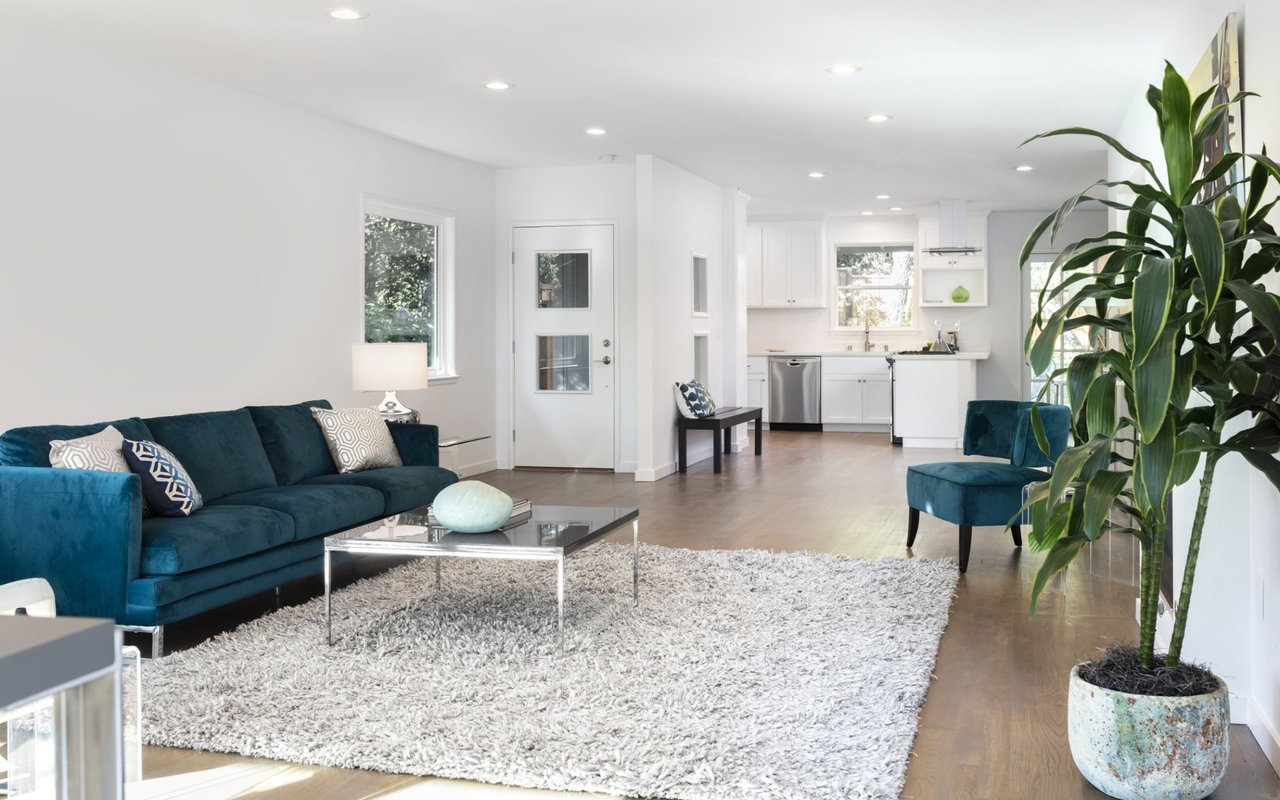
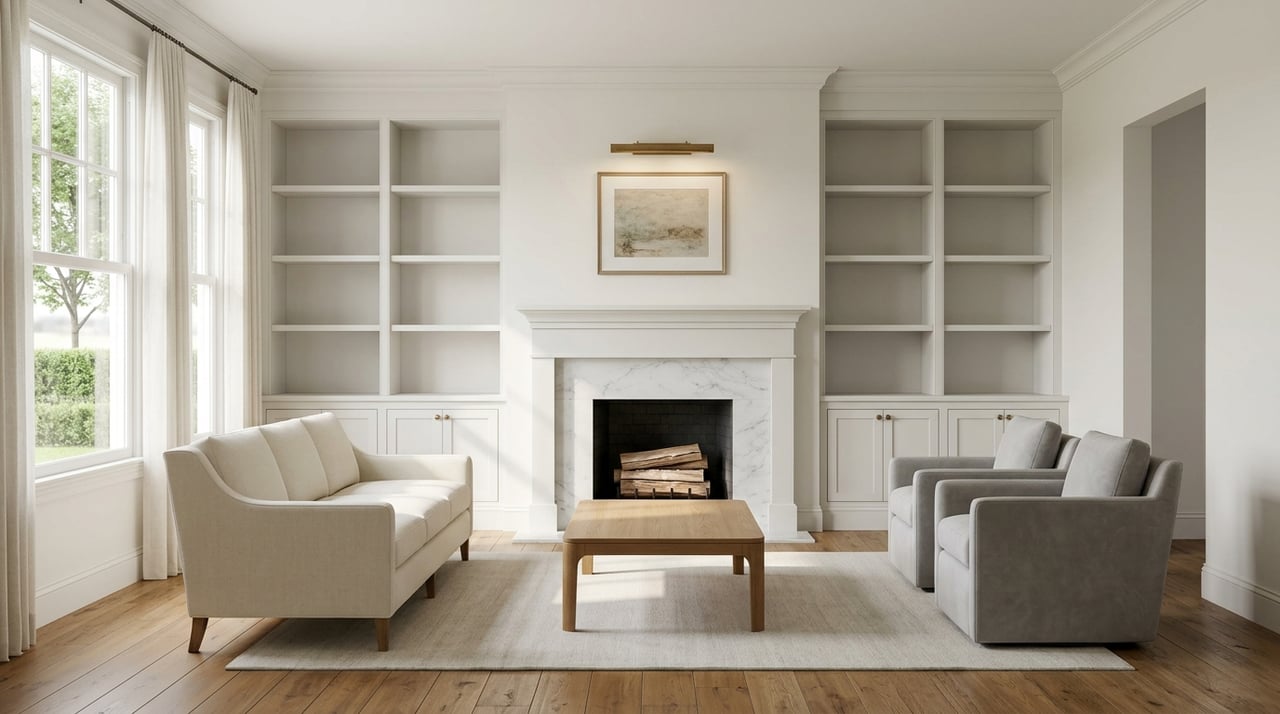
Staging should be part of that conversation. In NAR’s 2025 staging report, 83% of buyers’ agents said staging made it easier for buyers to visualize a future home, 29% said staged homes increased value offered by 1% to 10%, and 49% of sellers’ agents said staging reduced time on market. The most commonly staged rooms were the living room, primary bedroom, dining room, and kitchen.
For many Harrison luxury sellers, staging is less about filling an empty house and more about refining the presentation. Editing furniture, improving flow, and highlighting the best spaces can make listing photos stronger and in-person tours more memorable.
Create a High-End Marketing Plan
Once the home is ready, the goal is to launch with impact. Buyers in the luxury segment often begin online, so professional photography is essential. Video, virtual tours, and strong listing copy also help buyers engage with the property before they ever book a showing.
NAR’s consumer guide to marketing your home notes that marketing can include staging, professional photography, social media, signage, open houses, and competitive pricing. It also points out that MLS exposure typically offers the broadest reach, which is especially important when your ideal buyer may be moving within Westchester or relocating from outside the immediate area.
A strategic first weekend matters too. The same guide notes that the first open house after a home goes live can help maximize exposure. For a luxury Harrison property, that early launch window often sets the tone for interest, showing activity, and negotiating strength.
Handle Required Disclosures Early
For single-family homes in Harrison, disclosure rules are an important part of the pre-listing process. New York’s Property Condition Disclosure Statement must be delivered before the buyer signs a binding contract of sale, and the current form applies beginning July 1, 2025. It applies to one- to four-family dwellings, but not condos or co-ops.
This form is a disclosure, not a warranty, but it still deserves careful attention. If a seller does not deliver it, the buyer may be entitled to a $500 credit. Knowingly false or incomplete answers can also create liability, so it is wise to gather records and answer thoroughly.
Keep Local Tax Timing in View
As your sale moves forward, local tax timing can affect prorations and paperwork. The Town of Harrison tax calendar notes that town and village taxes are due in February and June, school taxes in January and September, and state and county taxes in April. Once you go under contract, those dates can matter when credits and prorations are calculated at closing.
This is not the most glamorous part of selling a luxury home, but it is part of a smooth transaction. Keeping billing addresses, payment records, and timing organized can help avoid last-minute confusion.
Review Offers Beyond Price Alone
When offers arrive, it is tempting to focus only on the top number. In luxury sales, though, the strongest offer is not always the highest one. Financing strength, appraisal risk, inspection terms, contingencies, closing date, and requested concessions can all affect your bottom line and your likelihood of closing.
NAR’s guide to contract contingencies explains that you can accept, reject, or counter an offer, and that a counteroffer voids the original one. It also notes that if a buyer includes a home-sale or home-close contingency, you may still be able to continue showing the property to other buyers.
A strong offer often includes:
- Clear proof of funds or strong financing
- Reasonable inspection terms
- Limited contingencies
- A realistic closing timeline
- Fewer repair or concession demands
As NAR also explains in its guide to working with a real estate attorney, legal review can be especially helpful when contracts involve trusts, estates, title issues, liens, or boundary questions. In higher-value transactions, those details matter.
Move From Contract to Closing
Once contracts are signed, the transaction enters the post-contract stage. Earnest money is typically held by a third party, and the buyer works through remaining contingencies and due diligence. This part of the process often includes an appraisal, title search, inspection-related negotiations, and insurance review.
NAR’s guide to steps between signing and closing notes that these steps can take several weeks or more. A title search confirms ownership and helps identify issues that need to be resolved before closing. If the buyer has an inspection contingency, that can also lead to repair discussions or credits.
For luxury homes, this stage requires steady coordination. The property may have more complex systems, larger grounds, or documentation that takes extra time to review. Staying organized and responsive helps keep the deal moving.
Plan for Transfer Taxes and Closing Costs
Luxury sellers in Harrison should also understand the tax side of closing. New York’s real estate transfer tax rules include a base transfer tax of $2 per $500 of consideration. For residences at $1 million or more, the 1% mansion tax also applies.
That can add up quickly on premium sales. At a $2 million sale, the base transfer tax would be $8,000 and the mansion tax would be $20,000. At a $3 million sale, those figures would be $12,000 and $30,000. Planning for these costs early helps you understand net proceeds and avoid surprises as closing approaches.
What Timeline Should You Expect?
Every luxury sale is different, but a practical planning assumption is several weeks to prepare the home, roughly one to two months on market if priced and presented well, and several more weeks to close. That estimate is based on Harrison’s reported 43 to 47 days on market, Westchester luxury’s 54-day average, and NAR’s guidance that post-contract steps often take several weeks or more.
In other words, selling a luxury home in Harrison is rarely a one-week sprint. It is usually a staged process that rewards preparation, strong launch timing, and careful negotiation.
Work With a Local, Full-Service Strategy
The best luxury sales plans are both broad and highly specific. You need the reach of professional marketing and MLS exposure, but you also need neighborhood-level pricing, presentation choices that fit your home, and guidance through contract details that affect your final outcome. In Harrison, where price bands and buyer expectations can vary meaningfully by area, that local focus is especially important.
If you are thinking about selling and want a tailored strategy for your property, Nancy Everett can help you evaluate timing, pricing, presentation, and next steps with the care and local perspective that luxury homes deserve.
FAQs
What is considered a luxury home in Harrison, NY?
- In Harrison and the wider Westchester market, a practical luxury benchmark is often $2 million and up, though the right price band depends on the neighborhood and property type.
How long does it take to sell a luxury home in Harrison, NY?
- A reasonable planning estimate is several weeks to prepare, about one to two months on market if the home is priced and presented well, and several more weeks to close.
What matters most when pricing a luxury home in Harrison, NY?
- The most important factors are recent sold comps, active competition, under-contract listings, home condition, upgrades, location within Harrison, and your preferred timeline.
Do sellers of single-family homes in Harrison, NY need a property disclosure form?
- Yes. For one- to four-family dwellings in New York, the Property Condition Disclosure Statement must be delivered before the buyer signs a binding contract of sale.
Should you stage a luxury home before listing it in Harrison, NY?
- Staging can be helpful because it may improve buyer visualization, support stronger photos and tours, and reduce time on market, especially in key rooms like the living room, primary bedroom, dining room, and kitchen.
What should sellers review besides price when comparing luxury home offers in Harrison, NY?
- You should also compare financing strength, contingencies, appraisal risk, inspection terms, concession requests, and closing timing before choosing the best offer.