Wondering how much your outdoor spaces really matter when selling a home in Purchase? In a market known for large lots, long driveways, and generous backyard amenities, the outside of your property often shapes a buyer’s first impression before they ever step indoors. With the right staging plan, you can make your home look more polished online, feel more inviting in person, and present every exterior area with purpose. Let’s dive in.
Why outdoor staging matters in Purchase
In Purchase, outdoor space is not a side note. Many properties feature broad front lawns, private driveways, patios, terraces, decks, and in some cases pools or recreation areas. That means buyers often start judging the home from the first exterior photo, not the foyer.
That first impression carries real weight. According to NAR’s 2025 staging research, 97% of members said curb appeal is important in attracting a buyer, 83% said staging helps buyers visualize a property as a future home, and 29% said staging led to a 1% to 10% increase in the dollar value offered. In the same research, 31% of buyers were more willing to walk through a staged home they saw online.
For a Purchase listing, that matters because exterior photos often feature the driveway, front approach, lawn, and backyard amenities right away. If those spaces look clean, organized, and easy to understand, your home can feel more compelling from the first click.
Start with the front approach
If you only stage one outdoor area first, make it the front approach. The driveway, walkway, front door, and entry landscaping usually create the strongest curb appeal signal. These are also the areas that appear most often in listing photography and at in-person showings.
NAR’s front-yard staging guidance points to the front door, lighting, plants, and clutter removal as the fastest ways to improve presentation. In Purchase, that usually means making sure the driveway is neat, the walk is clean, the entry lighting works, and the front door looks intentional and fresh.
Focus on the details buyers notice
Small details can change the whole feel of the entry. Clean address numbers, tidy planting beds, and a well-kept door finish help the home read as cared for. Cohesive planters and low-profile path lighting can also make the front entry feel finished without adding visual clutter.
A simple update often works better than overdecorating. One polished, balanced look is more effective than too many colors, pots, or seasonal items competing for attention. The goal is to make the home look calm, maintained, and easy to imagine arriving at every day.
Remove distractions before photos
Before photography, clear anything that weakens the first impression. That can include hoses, toys, bins, scattered pots, faded doormats, or worn outdoor accessories. On larger properties, visual noise can accumulate quickly, especially along the drive or around side entries.
This is one reason outdoor staging tends to pay off. Buyers do not just react to beauty. They also react to clarity. When the front approach feels clean and composed, the rest of the property starts with momentum.
Define each outdoor living area
In a Purchase home, exterior space often includes more than one destination. You may have a terrace off the kitchen, a pool patio, a lawn area, a fire-pit zone, or a deck near the rear of the home. Rather than trying to show everything at once, it helps to give each area one clear purpose.
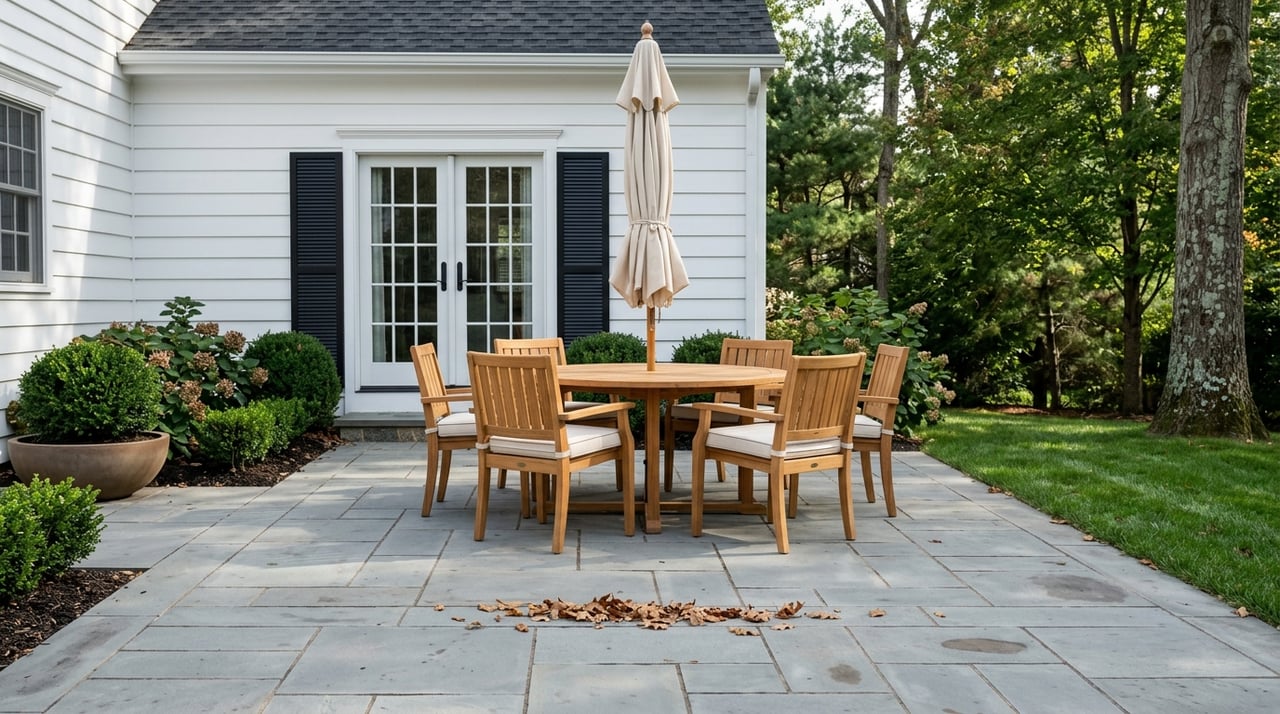
Patios, terraces, and decks usually show best when they read like an outdoor room. That means one seating vignette or one dining setup, open circulation, and a restrained mix of furniture and accessories. Buyers should be able to understand the space in a glance.
Keep furniture consistent
Mismatched cushions, extra chairs, and unused grills can make a large patio feel crowded. A cleaner setup usually photographs better and helps buyers focus on the scale of the space. If you are staging for listing photos, less is often more.
Try to create one primary scene. A dining table with simple place settings or a seating group with neutral cushions can be enough. The point is not to fill every corner. It is to suggest how the space lives.
Edit storage and overflow
Outdoor areas often collect practical items over time. Planters in stacks, pool gear, kids’ equipment, garden tools, and spare furniture can all make a beautiful yard feel like a storage zone. Before listing, edit hard.
This is especially important in photos. When a buyer sees too many loose items, it becomes harder to appreciate the architecture, the lawn, or the layout. A few well-placed pieces create a stronger impression than too many things competing for attention.
Pay close attention to pools and spas
If your property has a pool or spa, staging should never come before safety and maintenance. These spaces can be major selling features in Purchase, but they also need to present as clean, orderly, and compliant.
New York pool safety guidance says most pools or spas need a 48-inch barrier, self-closing and self-latching gates, and may require alarms. The 2025 Property Maintenance Code also says pools, hot tubs, and spas must be kept clean, sanitary, and in good repair.
Check local pool requirements
Harrison’s pool requirements add local specifics that sellers should review carefully. Permanent in-ground pools need a fence at least four feet high with a securely locked self-closing gate. For above-ground pools, ladders should be removed or locked in the retracted position when not in use.
If there has been pool-related electrical work, a separate permit is required. These details matter before showings and photography because they affect both presentation and buyer confidence.
Stage the pool area simply
Once safety basics are confirmed, keep the pool zone visually clean. Remove loose toys, floats, and excess equipment before photos and showings. A few neatly arranged lounge chairs and folded towels can feel polished, while too many accessories can look chaotic.
The water itself should look clear and maintained. Buyers notice that immediately. A sparkling pool with a clean deck sends a very different message than one that feels neglected, even if the rest of the yard looks strong.
Make large lawns feel intentional
Large parcels are part of what makes many Purchase properties appealing, but open space can also be harder to present well. If a broad lawn, court area, or fire-pit zone lacks definition, it may feel unfinished rather than generous.
The solution is simple: edit and organize. Fresh mulch, clean bed edges, trimmed shrubs, and a mowed lawn help the grounds feel maintained. If you have a recreation area, present it as one purposeful zone instead of letting equipment spread into surrounding space.
Use landscaping to support the home
Foundation plantings, shaped shrubs, and mature trees often frame traditional Westchester architecture beautifully. Outdoor staging should support that structure, not compete with it. A cohesive landscape presentation helps the home feel established and balanced.
This does not mean undertaking a full redesign before listing. In many cases, cleanup, pruning, and mulch do more for presentation than a larger project would. The most effective improvements are often the ones that make the property look cared for and easy to read.
Know when staging becomes regulated work
One of the most important parts of pre-listing preparation in Purchase is knowing when cosmetic work crosses into something that may require local approval. That is especially relevant on larger properties where driveways, trees, grading, fences, decks, and pool areas can all become part of the prep plan.
Harrison’s building department says one building permit application covers new construction, additions, alterations, pools, decks, accessory structures, fence, wall, and driveway work. The application materials also include a separate tree-removal permit and a swimming-pool requirements form.
Tree and land disturbance rules matter
If your staging plan includes removing trees, be careful not to assume it is routine yard work. Harrison’s tree-removal FAQ says a permit is required before removing private-property trees that are 4 inches or more in diameter, including dead or storm-damaged trees.
There are also site-work considerations. Harrison’s pool requirements sheet says land-development approval from the Town Engineer is required for land-disturbing activity of 500 square feet or more. For sellers, that means grading, reworking a pool area, or expanding certain exterior areas may need review before work begins.
Follow the right sequence
A smart pre-listing sequence is usually straightforward:
- Confirm current code and permit status
- Review any planned exterior changes
- Complete cleanup and staging
- Schedule professional photography
That order helps you avoid delays and keeps your presentation plan aligned with local requirements. It also reduces the chance of investing in work that creates a new issue right before going to market.
What exterior work is usually worth it
For most sellers, the highest-value outdoor work is not a full renovation. It is focused editing and maintenance. NAR’s 2025 release says sellers are most often advised to declutter, clean, and improve curb appeal, and that advice fits Purchase especially well.
In practical terms, the work that is usually worth doing includes:
- Power washing hard surfaces where needed
- Cleaning and simplifying the entry
- Refreshing mulch and bed edges
- Pruning overgrowth
- Removing toys, floats, and miscellaneous items
- Arranging one clear furniture setup in each outdoor zone
- Checking pool barriers, gates, and visible safety features
These changes tend to improve both photography and in-person showings. They also help buyers focus on the property itself rather than the tasks they think they will need to tackle after closing.
The goal is clarity, not perfection
Outdoor staging works best when it helps buyers understand the home quickly. In Purchase, where the land and exterior amenities often play a major role in value, that clarity matters even more. You want each outdoor area to feel maintained, intentional, and easy to imagine using.
That does not require turning your property into a showroom. It requires making smart decisions about what to highlight, what to simplify, and what needs to be checked before the home goes live. When that work is done thoughtfully, your listing can feel stronger from the street, on screen, and throughout the showing experience.
If you are preparing to sell in Purchase or a nearby Westchester town, Nancy Everett can help you evaluate which outdoor improvements are worth making, coordinate staging and photography, and guide your listing strategy with local insight and full-service support.
FAQs
What should you stage first on a Purchase, NY property?
- Start with the front approach, including the driveway, walkway, front door, lighting, and visible landscaping, because these areas shape curb appeal and often appear first in listing photos.
What outdoor staging projects are usually worth it before listing in Purchase?
- Cleanup and editing usually offer the best return, including decluttering, pruning, mulching, cleaning hard surfaces, and creating clear seating or dining zones rather than taking on a full exterior redesign.
What should you check before photographing a Purchase home with a pool?
- Check that the pool area is clean and in good repair, and review barriers, gates, ladders, and any required alarms or permits based on New York guidance and Harrison’s local pool requirements.
When can pre-list landscaping work require approval in Harrison?
- Approval may be needed when work involves trees, grading, driveways, decks, fences, walls, pools, or other land-disturbing changes, so it is wise to confirm requirements before starting larger exterior updates.
Do you need a permit to remove a tree before listing a home in Purchase?
- In Harrison, a permit is required before removing private-property trees that are 4 inches or more in diameter, including trees that are dead or storm-damaged.