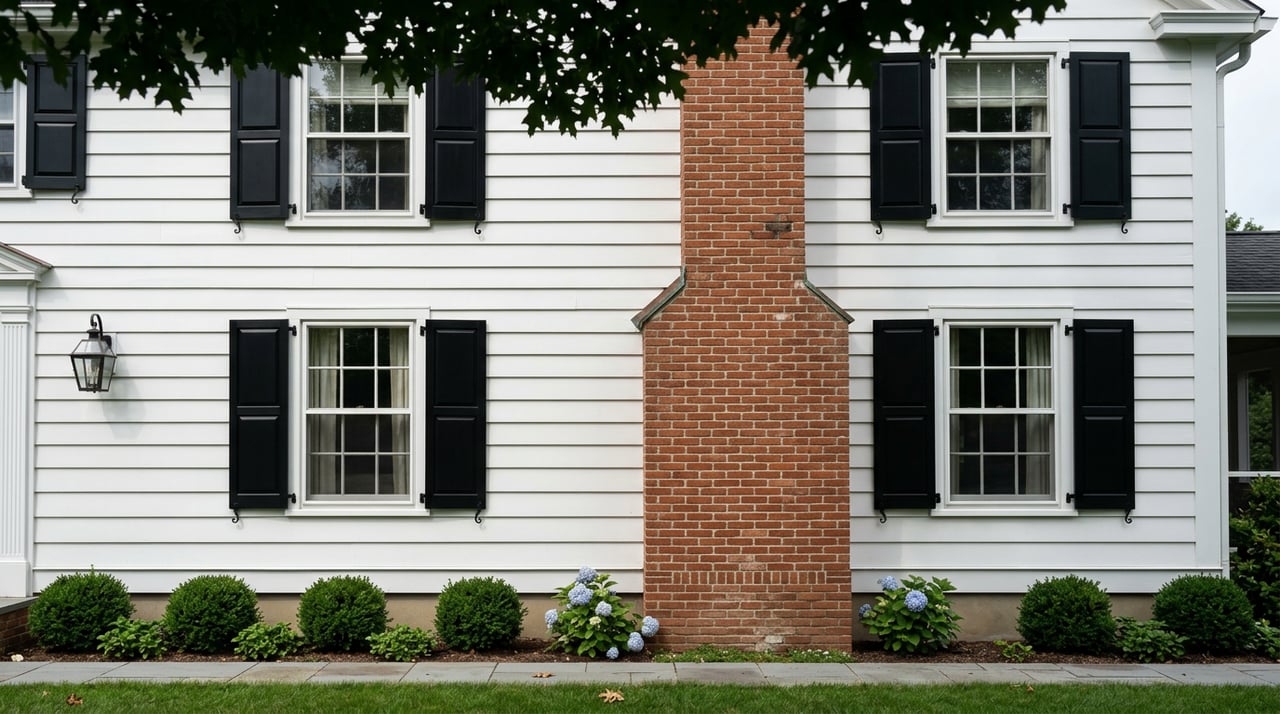
A buyer we spoke with this spring found what looked like a bargain: a handsome colonial listed with a Rye mailing address, priced below what comparable Rye homes were fetching. She wrote the offer assuming Rye schools and Rye taxes. The house was in Harrison. Same street, different municipality, different tax bill, different elementary school. The deal survived, but the conversation that saved it happened forty-eight hours before signing, not before offer.
That is the shape of buying in Harrison. The town-wide numbers on the portals describe a place that does not really exist. What exists is four distinct sub-markets stitched together by a single tax roll, and the friction shows up at contract time.
The town-wide median is a mix number, not a signal
William Pitt Sotheby's June 2026 Harrison report showed a single-family median sold price of $3.1M, up 81.4% year over year on twelve sales. Movoto's June 2026 median list for Harrison was $1.51M at $475 per square foot. Redfin's neighborhood page for West Harrison, meanwhile, put the median sale at $765K in February 2026. PropertyShark's Q4 median for the town landed at $1.7M at $502 per square foot.
Read those together and the story is not that Harrison appreciated 80% in a year. The story is that in a low-transaction month, a handful of Purchase estates can drag the median past $3M, and in a different month, a run of West Harrison sales can pull it back under $1M. The town-wide figure is a monthly weighted average of four different markets. It is not a benchmark you can price against.
The sub-markets are the benchmark. Here is how they actually sort:
| Sub-market | Zip | Typical inventory | Elementary school |
|---|---|---|---|
| Downtown Harrison | 10528 | Colonials and capes near the New Haven line | Harrison Avenue or Parsons |
| West Harrison / Silver Lake | 10604 | Village-scale homes, some two-family | Preston |
| Rye P.O. pocket | 10580 | Larger lots with Rye mailing address, Harrison municipality | Purchase or Harrison Avenue depending on street |
| Purchase | 10577 | Estate lots, some new subdivisions, country club adjacency | Purchase |
Downtown and West Harrison sit on the lower half of that spread. The Rye P.O. pocket and Purchase sit on the upper half. A $1.5M median hides both.
Four Harrisons, one tax bill
Downtown Harrison is the piece most buyers picture first. It is walkable to the Metro-North station on the New Haven line, and it holds much of the town's smaller-lot single-family stock built through the 1960s and 1970s, per the town's own municipal profile. Sterling Ridge, The Trails, Sunnyridge, and Brentwood are the named pockets. Prices here move with commuter demand and inventory turnover, and the buyer pool overlaps heavily with Rye and Mamaroneck shoppers.
West Harrison and Silver Lake are a different animal. Wikipedia describes West Harrison as effectively isolated behind I-287, with one main road, Lake Street, threading past Silver Lake Park on one side and a small business district on the other. It has its own restaurants, its own recreation anchor at Passidomo Veterans Memorial Park and Pool and the Leo Mintzer Center, and a village feel that produces prices closer to $700K to $1M for single-family homes rather than the town-wide $1.5M list median. Buyers who assume "Harrison" means downtown-adjacent are often surprised, in both directions, when they tour Silver Lake.
Purchase is the reason the top of the median swings so violently. The town's municipal profile identifies Purchase as the estate area, home to PepsiCo's headquarters off Anderson Hill Road, MasterCard south of Manhattanville University, seven private country clubs covering roughly 1,200 acres in whole or part, SUNY Purchase, and Keio Academy. Inventory is larger lots, longer driveways, and prices that regularly clear $3M and reach into the $5M to $15M range on the current active list.
Rye P.O. is the trickiest of the four because it is not a place. It is a mailing convention. Properties in the 10580 zip may sit inside the Town/Village of Harrison, which means Harrison taxes, Harrison schools, Harrison services, and a Rye envelope in the mailbox. The listing feed does not always make this obvious.
The friction is not the price, it's the paperwork
If you are shopping the 10580 pocket, confirm municipality, school district, and tax bill on every single property before you write. The mailing address is not the answer.
This is where the transaction goes sideways for buyers who did their research on the portals alone. Two houses across the street from each other can carry the same 10580 zip and different school assignments, different town tax rates, and different service providers. The listing sheet's "Rye P.O." line is a postal fact. It is not a municipal one.
The same problem appears in reverse on the Purchase side. A buyer touring in Purchase should verify whether the property is in the Harrison Central School District at all, because a handful of streets in the general area feed different districts entirely. This is not a footnote. It changes the resale pool.
The elementary boundary is a price signal
The Harrison Central School District operates four elementary schools, and the boundary lines are drawn tightly enough that they function as sub-sub-markets:
- Purchase School serves Purchase and the northern section of West Harrison.
- Preston School serves the Silver Lake area of West Harrison.
- Parsons School serves South Downtown.
- Harrison Avenue School serves the rest of Downtown, plus Sunnyridge, Sterling Ridge, The Trails, and Brentwood.
All four feed Louis M. Klein Middle School and Harrison High School, both downtown. That common upper-grade path is why families willing to trade a smaller Silver Lake house for a Purchase-zoned one at twice the price are not necessarily overpaying. They are paying for the K-5 assignment and the peer group that goes with it, then converging with everyone else in sixth grade.
Sellers on either side of a boundary line should price accordingly. A house one block inside the Purchase zone and a house one block outside are not comparable on square footage alone, and running an appraisal-style comp set that ignores the boundary will produce a number the market will reject.
How to read a Harrison listing before you tour
- Read the municipality field, not the mailing address. If the listing sheet lists "Town of Harrison" with a 10580 postal, the taxes and schools are Harrison's.
- Pull the elementary assignment from the district's address lookup, not from a portal's school ranking widget. The widget often shows the closest school, not the assigned one.
- Check the last sale date and price. Purchase estates and Silver Lake capes both trade slowly enough that a five-year-old comp can still be a signal, but the interim renovation history matters more than the raw appreciation curve.
- Look at the lot. Harrison's municipal plan describes "large lot suburban" as the dominant type in southern Harrison and Purchase. If a downtown listing shows an unusually large lot, verify the zoning before assuming subdivision or expansion potential.
- Ask about the tax trajectory, not just the current bill. Reassessments after major renovations are common enough here to warrant a direct question.
FAQ
Is a Rye P.O. address worth more than a straight Harrison address? Not automatically. Some 10580 Harrison properties price at a premium because they sit adjacent to Rye and share commuter and lifestyle amenities. Others do not. The premium, when it exists, is about the specific street and school assignment, not the zip.
Why does Harrison's median swing so much month to month? Because sales volumes are small and inventory is bimodal. A month with three Purchase closings and two West Harrison closings produces a very different median than a month with the reverse. William Pitt's June 2026 report captured twelve single-family sales for the whole town. At that volume, one estate closing moves the number.
Which sub-market has held value best over the last two years? The honest answer is that each sub-market is best measured against its own history, not against the town-wide line. Purchase estate pricing has been driven by a thin buyer pool for very large homes. Downtown and West Harrison have moved with commuter demand and inventory turnover. A same-house comparison across time is more useful here than any town-wide index.
Before you write an offer
If you are comparing Harrison to Rye, Rye Brook, Larchmont, or points west, the honest first step is not to look at a median. It is to identify which of the four Harrisons the house sits in, confirm the municipality and school assignment against the tax parcel, and then compare it to the right peer group. A house priced right for Silver Lake will feel like a giveaway to a buyer who has been shopping Purchase, and a house priced right for Purchase will feel unreachable to a buyer who has been shopping downtown. Both feelings are wrong.
For a confidential read on a specific street, a specific school zone, or the true peer set for a home you are considering, Nancy Everett offers a complimentary valuation and consultation drawing on decades of Rye and Harrison transaction experience. The sooner in the process the conversation happens, the fewer surprises appear at the closing table.